All posts by David House Agency

New York Times profiles David House Agency
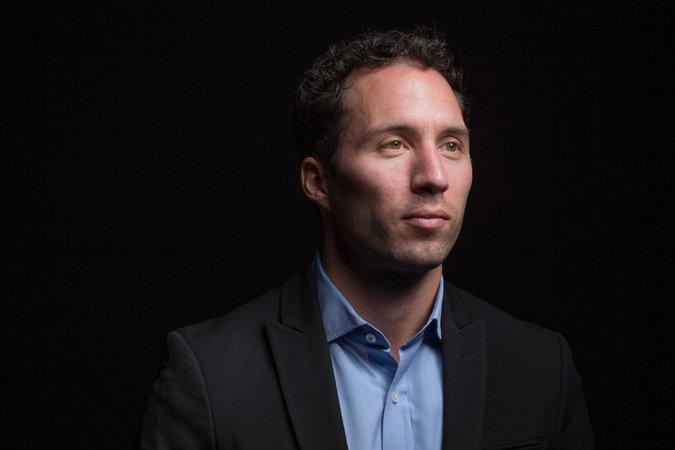
Credit Fred R. Conrad/The New York Times
Turning a Wrongful Imprisonment Into Advocacy
The Saturday Profile
By RICK GLADSTONE
ACCUSED of murder, railroaded through the Nicaraguan courts and wrongly convicted, Eric Volz can be forgiven for not having immediately recognized that his ordeal would become the foundation for his life’s work.
Eventually exonerated, Mr. Volz became a highly sought crisis manager for Americans entangled in criminal prosecutions overseas. His hand is visible in some of the highest-profile cases of recent years.
“I was able to help some people really quickly,” Mr. Volz said. “It was the beginning of the rest of my life.”
He helped free a California couple wrongly accused of killing their adopted African daughter in Qatar, and a Washington man falsely jailed by Nicaragua in a drug case.
He advised the family of Amanda Knox, the Seattle exchange student acquitted in 2011 of a tawdry murder in Italy, on how to decompress from post-prison stress. (Ms. Knox, whose acquittal was overturned on appeal,was exonerated for good by Italy’s highest court on Friday.) And he advised the sister of Kenneth Bae, the Korean-American missionary sentenced in 2013 by North Korea to 15 years of hard labor and freed last November.
For Mr. Volz, it all goes back to his run-in a decade ago with the Nicaraguan authorities.
When he was in his mid-20s, living in Nicaragua and running a magazine for expatriates, Mr. Volz was charged, convicted and sentenced to 30 years’ imprisonment after a Nicaraguan woman, his former girlfriend, was found murdered. The police, prosecutors, judge and most of the news media there ignored evidence that he had been far from the crime scene.
Mr. Volz and a team of lawyers and investigators won a reversal of his conviction on appeal. Nicaragua’s Sandinista government, known for antagonism toward the United States, reluctantly freed him after more than a year. He returned home in December 2007.
Many in Nicaragua, including the victim’s mother, have continued to maintain that Mr. Volz got away with murder. It is still unsafe for him to go back there, he said.
“A lot of people were convinced I was guilty,” Mr. Volz, who lives in Los Angeles, said in a recent interview. “But there’s only one truth. Facts are facts.”
MR. VOLZ chronicled his imprisonment and vindication in a book, “Gringo Nightmare.” His story put him on a path that intersected with fellow Americans in criminal trouble in other countries.
He was approached by lawyers and groups representing innocence movements, a growing area of legal advocacy that seeks to overturn verdicts considered unjust.
In time, Mr. Volz founded a crisis-management business, the David House Agency, named, he said, for “the shepherd who slew a giant and knew he was on the right side of the equation.”
State Department figures show that around 3,000 American citizens are arrested overseas annually. It is unclear how many may have been wrongfully accused.
If nothing else, Mr. Volz said, “most Americans arrested overseas are guilty of being foolish.”
Still, he and others who have endured an unjust foreign incarceration said they believed the arrests partly reflected rising anger toward the United States. Foreign prosecutions of Americans, they said, are in effect a coercive policy tool used by less powerful governments.
“People travel to parts of the world where there is risk, there is danger, and I think the danger is increasing,” said Sarah E. Shourd, an American who was arrested, along with two male colleagues, by Iranian border guards as they hiked along the Iran-Iraq frontier in 2009. All were imprisoned and accused of spying in a legal ordeal that was not resolved for two years.
Ms. Shourd, 36, is now collaborating with Mr. Volz to create a foundation to help the families of Americans imprisoned overseas.
The cost of fighting a foreign prosecution can be extraordinary, a point Mr. Volz said he tried to impress on prospective clients. Families should expect to pay $1 million to $2 million for a process that can take at least a year and carries no guarantees, Mr. Volz said.
He would not specify his rates, but said that they were similar to what a lawyer would charge and that he did about 25 percent of his work for free.
“Justice is resource-intensive and expensive,” he said. “People have to liquidate assets and cash in savings.”
Based in Los Angeles, with a handful of employees, David House is described by defense lawyers as a hybrid of international detective work, legal research, political analysis and diplomatic lobbying, sometimes done to the annoyance of the State Department. Mr. Volz described David House as “a private embassy.”
A onetime aspiring mountain climber, with a boyish face and braces that belie his 35 years, Mr. Volz hardly looks the part of an international troubleshooter.
“He’s really sort of taken off,” said Mark A. Godsey, a professor at the University of Cincinnati College of Law and an authority on wrongful convictions, who directs the Ohio Innocence Project and got to know Mr. Volz after his Nicaragua imprisonment.
“He has an understanding that there’s no playbook for this sort of thing,” Mr. Godsey said. “You sort of have to go through it to understand, go through all these dynamics to right an injustice.”
ONE of Mr. Volz’s first cases was in the country he had left — Nicaragua. Jason Puracel, a real estate broker from Tacoma, Wash., who had started a family with a Nicaraguan woman, was sentenced to 22 years in prison in 2011 on accusations of money laundering and drug trafficking.
Not only did prosecutors fail to produce evidence, but co-defendants said they did not even know Mr. Puracel. David House and the California Innocence Project, a program at the California Western School of Law, helped organize a defense that included public pressure on Nicaragua for what they called a fabricated case. Mr. Puracel was freed in 2012.
Mr. Volz said he had been hired because “I was the only one who knew the process.”
His business motto, he said, is to be “unseen in all the right places.”
His biggest victory so far was with Matthew and Grace Huang, an American couple of Asian descent from Los Angeles living in Qatar. They were held there for nearly two years, accused of having fatally abused their adopted daughter Gloria, 8. She died in January 2013 after not having eaten for days.
The child had an eating disorder and other health issues from her deprived upbringing in Ghana. She also had a naturally scrawny build that prosecutors assumed was evidence of starvation. Suspicious of multiracial families and adoption, which are unusual in Qatar, they regarded the Huangs as probable child traffickers.
Again working with the California Innocence Project, Mr. Volz helped assemble a defense that included evidence that the prosecution had faked a pathology report on the cause of Gloria’s death.
Mr. Volz fought aggressively for the Huangs, including securing a private meeting with Qatar’s attorney general. He also pressed American diplomats in Qatar, who in his view were reluctant to offend the Qataris, hosts to the biggest United States military air base in the Middle East.
SOME State Department officials privately expressed irritation with Mr. Volz over the Huang case, saying David House’s advocacy was sometimes counterproductive.
“David House is effective at raising the public profile of a case and therefore applying pressure on governments that may help in some instances to get speedier attention,” said one official, speaking on the condition of anonymity. “But the political frame through which they see the world isn’t necessarily always the correct one.”
Mr. Volz rejected such criticism. “My job is to represent the best interest of the client,” he said, “and if that’s at odds with the State Department, so be it.” He said he felt vindicated on Nov. 30 when a Qatari appellate judge dismissed the Huang case.
Perhaps his most important contribution in that case, he said, was showing the appellate judge a photograph of a Ghanaian runner, as emaciated-looking as Gloria. That photo, he said, probably convinced the judge that she had not been starved.
“You just have to know how to use the truth,” Mr. Volz said.

Wall Street Journal: Qatar to Allow Americans to Return Home
Qatar to Allow Americans to Return Home
Decision to Lift Travel Ban Ends Two-Year Tussle Between U.S. and Qatar
The Wall Street Journal
By FELICIA SCHWARTZ
Updated Dec. 2, 2014 7:05 p.m. ET
WASHINGTON—An American couple in Qatar was set to return home on Wednesday after the government agreed to lift the pair’s travel ban, ending a bureaucratic logjam that prevented the couple’s departure even after being cleared of charges related to an adopted daughter’s death.
A Qatari judge ruled on Sunday that Matthew and Grace Huang weren’t responsible for the 2013 death of their 8-year-old daughter, Gloria, and that the married couple was free to return to the U.S. But an earlier travel ban barred travel.
On Tuesday, the Qatari government said the Huangs met the requirements necessary to remove the travel ban and that it wouldn’t file an appeal in the case, U.S. Ambassador to Qatar Dana Shell Smith said on Twitter.
“The United States applauds this decision, and we look forward to seeing the Huangs reunited with their children at home,” Secretary of State John Kerry said in a Tuesday statement.
The lifting of the travel ban ended a two-year legal saga and appeared to reflect a desire on the part of both countries to end the protracted battle. The bureaucratic dust-up was the latest in a longer tussle with the Qatari government over holding the Huangs.
Throughout the legal proceedings against them, the Huangs were subject to a travel ban preventing them from leaving the country. The State Department made repeated requests throughout the court proceedings for Doha to withdraw the travel ban, and raised concerns that the Qatari court didn’t weigh all of the evidence and that cultural misunderstandings might have led to an unfair trial.
Senior Qatari officials have stressed in recent interviews that the Huangs’ case was strictly a judicial matter.
Following Sunday’s verdict, the couple headed to the airport to return to Los Angeles. The U.S. Ambassador to Qatar Dana Shell Smith met the Huangs at the airport, intending to greet them and usher them home.
But the Huangs were stopped at immigration and informed that the ban still applied. The couple’s legal team was suspicious of the additional delay, but U.S. officials said the ban remained, because lifting it required filing additional paperwork. Ms. Shell remained with the couple and their representatives as they sought permission to return home.
The issue was escalated up to Mr. Kerry, who spoke with his Qatari counterpart by telephone on Sunday to ask the government to implement the court’s decision and allow them to return home swiftly.
After filing the additional paperwork Monday, the Huangs’ representatives called on the U.S. to do more to secure the Huangs’ departure, including placing a high-level call to the emir of Qatar to urge their release following Sunday’s decision. A U.S. official said removing the travel ban was a process separate from the judge’s ruling, and required its own evaluation process that could take days.
The U.S. official said the U.S. had faith that the Qatari’s legal process could resolve the situation, and that abiding by Qatar’s legal framework would help to preserve the bilateral relationship.
Had the attorney general’s office decided to file an appeal and drag on the legal proceedings, it would have harmed U.S.-Qatar relations and prompted stronger intervention on the part of the Obama administration, the official said.
“This definitely has not gone the way we’d like to see it go,” the official said.
The tiny gulf emirate is an important ally of the U.S. Qatar is part of the U.S.-led coalition against Islamic State, and its air force has provided surveillance and logistical support to the air campaign. U.S. Central Command has launched large numbers of strikes from Qatar’s Al-Udeid air base west of Doha.
Still, Qatar has joined other critics in calling for the Obama administration to do more to target the regime of Syrian President Bashar al-Assad.
When the Taliban released Sgt. Bowe Bergdahl in exchange for five Taliban officials in May, Qatar served as the interlocutor between the U.S. and the Taliban. But while the U.S. has taken advantage of Qatar’s ties in the region, it has also criticized them. The U.S. Treasury Department has accused Qatar of lax oversight of its financial system and has sanctioned a number of Qatari nationals or identification-card holders for their alleged role in funding al Qaeda and Nusra Front, its Syrian affiliate.
The Huangs were arrested in 2013 after Gloria, who they adopted from Africa, died suddenly. The Huangs initially were charged with murder, but the Qatari court eased that with a charge of child endangerment. The Huangs denied the charges. Adopted from Ghana, Gloria had an eating disorder, the Huangs and their legal team said.
The prosecution accused the Huangs of starving Gloria with the intention of harvesting her organs. The Qatari police also accused the Huangs of human trafficking, indicating in police reports and court testimony that they couldn’t understand why a couple of Asian descent would adopt African children.
In March, the Huangs were sentenced to three years in prison, but an appeals court on Sunday overturned the conviction.
The Huangs are eager to get home, said Eric Volz, managing director of the David House Agency, an international crisis firm the couple hired to help with their case. “All the proper paperwork has been filed and any continued delays are a cause for concern. We ask that the State Department keep up any necessary pressure to ensure Matt and Grace are able to depart tomorrow,” he said.
The Huangs moved to Qatar in summer 2012, when Mr. Huang took a job in Doha to help oversee an infrastructure project related to preparations for the 2022 soccer World Cup.
—Jay Solomon contributed to this article.

New York Times : Mid-East High Court Declares Huangs Innocent

American Couple in Qatar, Cleared in Child’s Death, Petition to Lift Travel Ban
RICK GLADSTONE DEC. 1, 2014
DOHA, Qatar — An American couple in Qatar who spent nearly two years fighting accusations they had killed their adopted daughter from Ghana were acquitted of wrongdoing on Sunday in an emotional courtroom reversal by an appellate judge who said that they were good parents and that the prosecution had no case.
But the joy and relief expressed by the couple, Matthew and Grace Huang of Los Angeles, gave way hours later to new frustrations and fear, as Qatari immigration officials prevented them from leaving the country even though the appellate judge had said they were free to go home.
Tensions at Doha’s international airport escalated as the Huangs, escorted by legal representatives and the United States ambassador, Dana Shell Smith, were told a travel ban on the couple was still in effect. It was unclear why.
Ambassador Smith and other American diplomatic officials went into private talks with the Qataris, but by Sunday evening there was no resolution. Read full article here…

Philippines: Client Declared Innocent. Freed.
On August 2, 2016, David House Agency’s pro-bono client, Scott McMahon, was acquitted of false rape charges after spending more than 5 years in a Filipino prison. We believe Mr. McMahon holds the record for the longest-pre-trial detention of an U.S. citizen abroad.

Iran releases our former client, Amir Hekmati
We are please to announce that Iran finally released our former client, Amir Hekmati, after more than four years in prison. The David House Agency was hired by the Hekmati family to help manage the first phase of Amir defense and worked closely with a former US Ambassador at Large. Amir’s initial death sentence was overturned due to a carefully executed strategy that we had the privilege to be a part of.

New York Magazine: Cross-Cultural Prejudice and Bad Science Affect Huang Case
“Do You Know How Your Daughter Died?”
When Gloria Huang was declared dead in a Qatar emergency room, her parents had no time to grieve before they were caught up in a legal nightmare.
By: Robert Kolker
Gloria loved singing and dancing. She loved being read to — Mrs. Tiggy Winkle and Two Bad Mice, by Beatrix Potter, were favorites. She loved puzzles, princesses, climbing trees, and riding on her bicycle with her helmet off. She loved watching The Nutcracker over and over while her mother did her hair. Her brothers would get a little jealous of that one-on-one time. Gloria loved that, too.
There were also problems that were hard for an 8-year-old to articulate. When Gloria acted out, it was usually with food. She’d refuse to eat for days, then brag to her brothers about how long she could go. She’d sneak into the kitchen at night and gorge herself — a full loaf of bread, a whole box of cereal, a package of cookies. Sometimes she’d eat leftovers from the garbage — or tissues. In one frightening episode, it was aspirin and Pepto-Bismol. Her parents began to lock her bedroom door at night.
Gloria was adopted, and though adopting troubled children was something that Matt and Grace Huang had sought out together — a mission in line with their Christian faith — they were floored by some of the challenges. Matt and Grace had known each other since they were teenagers in the same church choir in Los Angeles. His parents were from Japan and the Philippines; her family had come from Taiwan when she was 7. They both attended the University of California–Irvine. When they started dating, after college, Grace was studying to be an elementary-school teacher; Matt was working for the engineering company MWH Global, setting up water-infrastructure projects in L.A. They got married and talked about starting a family. When they learned they could not have children of their own, they decided to find others to take care of, just as they trusted that God would always take care of them.
They settled on Ghana, where they could adopt older children, ones who might be overlooked by other prospective parents. Gloria was 4 when they first learned about her in 2008; her brother Ezra* was 6. They were living together in an orphanage. “They just kind of kept coming back to us,” Grace says. “We would think about them. We were praying for them, that they would find parents. But, yeah, it ended up being us.” Grace spent two months at the orphanage, getting to know them and easing the transition. She decided to quit her job as a teacher to homeschool them.
When she arrived in L.A. in May 2009, Gloria weighed 38 pounds — just below average. Her checkup revealed giardia, a parasitic infection. She took antibiotics, and by July 2010, she was 43 pounds. Then there was a backslide: In November 2011, she was 40.8 pounds, significantly underweight for her age. Grace and Matt understood what she was going through, to a point. They’d learned that because of their early deprivation, children like Gloria can feel constantly empty, both physically and emotionally, cycling in and out of trusting their caregivers.
There was a diagnosis for this — reactive attachment disorder, or RAD — and the Huangs followed the protocol, creating what Grace called a “high structure, high nurture” environment. Mealtimes were still the same: They sat together at the table as a family, whether Gloria ate or not. They made sure she stayed hydrated, and her doctor assured them she was healthy despite her low weight and encouraged them to be patient and nonconfrontational. RAD is considered an emotional disorder more than a medical one, and pushing food on their daughter seemed only to spur more tantrums.
In 2012, MWH Global named Matt part of a team designing a water-purification project to ready the city of Doha, Qatar, for the 2022 World Cup. He had always traveled a lot for work, but this job would be a two-year assignment, at least. Matt and Grace decided they should go as a family. Before the move, their pediatrician gave a clean bill of health to Gloria, her big brother, and a new little brother — Jesse, adopted from Uganda a year earlier. They arrived in Qatar in the middle of Ramadan, when Doha seemed all but closed. They rented a duplex in a gated compound with a pool, made friends with non-Qatari employees of ExxonMobil and other big companies, and joined a church. Life took on a certain rhythm, not unlike the one they’d known at home.
Then came Christmas. Gloria was withdrawn, and as usual she wasn’t saying why. They celebrated Ezra’s birthday in early January. Soon after, the family was at lunch at another expat home when Gloria gorged herself on cake and biscuits. Afterward, she said she felt sick and refused to eat. Matt and Grace faced a quandary. They had yet to find an English-speaking pediatrician, and so they decided that, rather than take Gloria to a Qatari doctor whom none of them knew and risk sending her further into her food boycott, they’d try to ride it out. Looking back now, they can’t help but wonder if they missed signs that her condition was more serious.
There’s no set rule for how long to let RAD kids refuse to eat; it depends on the child’s condition. A day passed, then two and three. Gloria still wasn’t eating, but she was running, playing, jumping. Some friends came over for Bible study and later said they saw Gloria with the other children, and then heading upstairs to go to bed.
The next night the family had a late dinner planned. Grace was out, Matt and the boys were downstairs, and Gloria was up in her room. When Grace came home at about 8:30 p.m., Matt went upstairs to get Gloria. That’s when he saw his daughter lying on the floor — foaming at the mouth, her shirt soaking wet.
Matt threw something dry on her and carried her to the car. Doha’s Al Emadi Hospital was only a few blocks away. He made it to the ER at about 9:15. He was kept from the operating room as doctors and nurses flew in and out in a panic. At 9:57, Gloria Afful Huang was declared dead. The cause, the staff told Matt, was cardiac arrest. “I was told she was dead on arrival,” he later said. Still trying to comprehend what had happened, Matt went home to bring Grace and their sons back to see Gloria one last time.
When they got to the hospital, they were given a brief moment to pray alongside Gloria’s body. Then Matt had to deal with some insurance paperwork. As soon as he was away from the others, a police officer asked him to step outside, where a large SUV was idling at the curb.
Matt was ushered into the backseat. A plainclothes officer started asking him questions. Meanwhile, Matt noticed men in uniform, about ten in all, approaching the SUV, surrounding it entirely, blocking his view of his family.
“Who is this girl?”
The officer was not satisfied, particularly when Matt told him that Gloria was his daughter. “They said, ‘How did she die?’ ” Matt remembers. “They asked me that ten, 15 times.” He had no answer because he had no idea.
That wasn’t enough for his interrogator. Matt says he was asked “How come you don’t know how she died?” several times. Then the man said, “Oh, you’re a bad father, you’re working too hard?” He was told again and again that he was a bad father.
Inside the hospital, Grace was being questioned, too. “The first question was ‘Who is she?’ ‘She’s my daughter.’ ‘No she’s not, she’s a different color from you.’ ‘She’s my daughter.’ ‘What country are you from?’ ‘I’m American.’ ‘No, you’re not.’ ‘Yes, I am American.’ ”
Other officers questioned the boys. “I was kind of listening to them,” Grace remembers. “‘Where do you go to school?’ ‘We homeschool.’ ‘What do you do? What do you take?’ ‘We get up and we … ’ — going through the whole schedule.” One question seemed especially pointed, given the circumstances. “Do you eat?” the boys were asked.
They said yes, they do. “They asked us, like, ‘Did your mom beat your sister? Did they give her food?’ ” Ezra later recalled. Grace and the boys were brought to one police station, then another, where they were questioned again in rudimentary English. “I had to simplify my language and explain homeschool and adoption,” Grace says. “And they didn’t translate anything for me.”
Matt was brought to the same station. The couple had been up all night when they were asked if they knew someone who could take the two boys. After contacting the U.S. embassy, Matt called a friend from their church, who arrived close to dawn. Matt and Grace said good-bye to their boys. The next day, they were charged with murder.
The vast majority of Qatar’s 2 million inhabitants are foreigners, there to consult on projects related to oil and, more recently, the upcoming World Cup. But Qatar is no melting pot. Rich Qataris known to back terror groups like Hamas live not far from a strategically important American military base. Expats like the Huangs live almost in a nation within the nation, with their own schools, shops, and churches. In that environment, it is easy to be unaware of Qatar’s judicial and political system — unless something goes terribly wrong.
The Huangs had come to Qatar perhaps particularly optimistic about, and even oblivious to, the challenges they’d face there, both as foreigners and, as it turned out, parents of adopted children. At a swift, crowded hearing, a Qatari prosecutor charged the couple with “premeditatively killing Gloria Afful Huang by locking her up in her room in their house and denying her food and drinks for several days with the intent of making her reach the limit of starvation that leads to death.”
The Huangs’ decision not to send their daughter to a doctor when she hadn’t eaten in four days seemed particularly suspect to the court. From the start, the police worked to find evidence that the Huangs had been withholding food from Gloria. They saw a line in the ER’s report suggesting that she appeared malnourished; they heard from friends of Matt and Grace about how Gloria hadn’t eaten since getting sick on cake; and when they examined the Huangs’ house in Doha, they saw a lock on the outside of her bedroom door, with a key in it. The lock had come with the rental — Matt maintains that Gloria had not been locked in her room the night she died — but to the police it was evidence that the Huangs punished her by keeping her in her room.
A month after Gloria’s death, an investigator testified that he believed that Matt and Grace weren’t parents at all but human traffickers — intending “most likely to either sell their organs or to conduct medical experiments on them.” The investigator seemed to point to the very fact of an Asian man and woman’s having three African children as grounds for suspicion: “The adoption process consists of searching for children who are good-looking and well-behaved,” he said, “and who have hereditary features that are similar to those of the parents. But the children connected to this incident are all from Africa, and most of the families there are indigent.”
The boys were sent to an orphanage — a heartbreaking turn. Matt and Grace were sent to separate detention centers. Matt kept to himself for fear of being attacked. He was spared beatings by guards but not protected from other inmates. When he did find people who spoke broken English, he saw how people could be locked up in Qatar on a whim and how his case was, perhaps, not so different from many others. “A lot of the guys are in there for very petty crimes,” he says, “and they’re just stuck in a system that’s broken.”
Grace was held with about 50 women, many of whom were migrant workers and also didn’t speak Arabic. Many were there for what were called “boyfriend cases.” “Which means they saw a man or they met a man who was suspected to be their boyfriend. They didn’t even have to go near a man — they could have had a text message.”
Matt and Grace couldn’t communicate with each other, much less adequately mourn their daughter. Friends from church would reassure them that they’d visited Ezra and Jesse and that the boys were more or less all right. Those same friends tried to vouch for the Huangs in court, only to be turned away. At the couple’s early hearings, a judge would hear 40 cases in 30 minutes. The U.S. embassy sent a representative, and Matt’s employer hired a Qatari attorney, who never visited them in prison. “They would constantly ask for bail,” Matt says, “and we’d be constantly denied.”
Grace’s mother and brother, along with Matt’s parents, came to Qatar. The key to their freedom, they all thought, would be Gloria’s autopsy. Yet that report declared the cause of death to be dehydration and cachexia, a wasting away of the body. The prosecutor took this to mean she had starved to death. The doctor noted that Gloria’s vital organs suggested she had no underlying conditions that might have caused her death.
Matt and Grace’s family commissioned a second opinion after her body was returned to the U.S. Harry Bonnell, a San Diego doctor, wrote to the Qatari court that his examination showed that no tissue samples had been taken from her organs — evidence, the Huangs say, that at least part of the Qatari autopsy had been botched or fabricated. By the time Bonnell saw the body, however, it was too late for him to make his own assessment of how she died. Based on her history, both Bonnell and a second American medical examiner who reviewed the case suggested that Gloria’s food issues may have masked an undiagnosed problem — a lingering parasite issue or pre-diabetic condition — that may have made her prone to a sudden infection.
As the trial approached, the Huangs’ lawyers submitted documentation showing that their adoptions were legal, sworn statements from friends in Doha attesting to their loving relationships with their children, information about RAD and how it’s treated, and evidence showing Gloria was active in the days before her death. But on the first day of the trial, investigator Ahmad Ishaq told the court he believed Gloria “stayed seven days in the room without food” as a punishment for taking cake.
Then he was asked about human trafficking. “There could be a connection,” Ishaq responded. “The deceased girl was black from Africa … while the parents have wheaten or white complexion. Those who opt for adoption normally choose beautiful children.”
The prosecution’s other witnesses echoed this theory. The judge ordered the Huangs to remain in jail pending his decision. If found guilty, Matt and Grace faced the death penalty.
Frustrated and scared, Matt’s parents sought the help of the David House Agency, a Los Angeles–based international-crisis firm founded by Eric Volz. Convicted of murder in Nicaragua a decade ago, Volz was eventually exonerated; he’s since become an adviser for Americans in trouble abroad. Most famously, he advised the family of Amanda Knox, who had been charged with the murder of her roommate in Italy. His clients tend to have an underlying naïveté, Volz says, believing that being an American protects them from the vagaries and injustices of a foreign system when the opposite is often true.
Volz privately urged the U.S. government to take a public stand on the Huangs’ case. At the same time, he sought to draw attention to them in the media. In August 2013, a story was published by Al Jazeera, which is owned by the Qatari royal family. The article called the matter “a case which lawyers and medical experts in the U.S. say is based on shoddy evidence and poor science,” and cited “a campaign” to release the Huangs. Days later, Volz says, he was contacted by a private representative for the Qatari attorney general, requesting a private meeting.
Volz arranged to see Attorney General Ali bin Fetais al-Marri at a hotel in Paris. “I brought an iPad,” Volz recalls, “with pictures of the Huangs.” There was Gloria with the family at Yellowstone and opening Christmas presents. “She’s cute,” al-Marri said. Then he stopped, Volz says, and glanced around, as if checking for cameras.
“I need this campaign to stop,” al-Marri said. “What do you want?” Volz said he wanted Matt and Grace to be released immediately and for their sons to come home. Al-Marri (whose office did not respond to requests for comment) agreed, says Volz, but said it would take time.
By the fall of 2013, the boys’ travel ban was lifted and they were sent to live with Grace’s mother. But the case against the Huangs continued. In jail, Matt says, he was assaulted by inmates several times, once sexually, the details of which he still won’t discuss.
On November 6, 2013, the Huangs’ friends were permitted to testify at a new hearing, and despite objections from the prosecutor, the court approved the request for the Huangs to be released until the judge made his decision.
Matt and Grace moved to a small apartment, where they largely kept to themselves. They filled the days by Skyping with their sons, homeschooling them from half a world away. They petitioned the court to be allowed to go home while awaiting the verdict, and when they were turned down, they appealed again to the media. “We have lost our daughter, and our sons have lost their sister,” Matt said in a statement picked up by CNN. “We feel that we have been kidnapped and we just want to go home.”
It was right around then that Matt’s employer sent him a letter asking him to return to work or take an unpaid leave. He was incensed, particularly by MWH’s remarks that it had continued paying Matt his salary and benefits, even though it “was under no obligation to do so.” In Matt’s view, being asked to come back to work while still fighting a murder charge amounted to a forced dismissal. He resigned. (In a statement, the company said, “MWH incurred hundreds of thousands of dollars toward the cost of Matthew’s criminal defense … We made several attempts to personally contact him to discuss support and to review available benefits, but those attempts were refused.”)
By then, Matt and Grace had hired a new law firm, Lewis Roca Rothgerber, which filed a formal request to investigate Gloria’s pathology report. Janice Ophoven, a medical examiner with a pediatric specialty, knocked down the starvation theory, writing, “One cannot medically diagnose that a child was starved to death if the child was seen functioning and walking just a day before dying.” That argument seemed to work. On March 27, 2014, the judge threw out the Huangs’ murder charge.
But the case wasn’t over. In the same hearing, the judge suddenly ruled on an entirely new charge. The Huangs, he said, were guilty of child endangerment — committing a criminal act when they did not seek medical attention for their daughter’s refusal to eat.
Volz often reminded the Huangs that their case wasn’t happening in a vacuum. Qatar hosts the largest U.S. air base in the Middle East, and that summer, the two countries were negotiating an $11 billion arms deal. Two months after the Huangs’ conviction, five members of the Taliban were flown from Guantánamo into Qatar’s custody in exchange for the captured soldier Bowe Bergdahl’s release. From the Rose Garden, Barack Obama personally thanked the emir of Qatar “for his leadership in helping us get it done.”
The State Department has never acknowledged any connection between these events and the Huangs’ case, and no government source would comment for this story. But Volz believes that foreign governments tend to treat cases involving Americans opportunistically and that having Americans in limbo helped Qatar’s bargaining position. “We believe institutional kidnapping is a new form of asymmetric warfare used by small regions to engage larger powers,” Volz says.
On July 31, 2014, after the arms deal was announced, the State Department issued its first public statement urging the Qatari government to lift its travel ban on Matt and Grace. But at a hearing for their appeal of the child-endangerment conviction, a Qatari prosecutor continued to argue that the Huangs had “purchased the children.” Matt had enough, shouting in open court: “You lie! You lie!” The outburst was reported worldwide. In November, a U.N. monitor assigned to evaluate the independence of Qatari judges and lawyers sent a heated communication to the emir, arguing that what was happening to the Huangs appeared to be a violation of international law.
Despite the renewed attention, on November 30, when Matt and Grace arrived at the court for the verdict of their appeal, they had low expectations. Listening to a translator as the judge spoke, they heard the words “three years” and assumed that was the sentence, but then it became clear that “he was quoting all the things we had provided in our written arguments,” Matt says. “And at the end, he said, ‘They’re declared innocent.’ ”
They were stunned: After nearly two years of prosecution and detention, neither expected a complete exoneration. Grace remembers thinking, I’m not going to believe it until we’re in the air. Hours later, the U.S. ambassador accompanied the Huangs to the airport, but as they waited to board, immigration officers confiscated their passports. It took three days — and a call from John Kerry to the Qatari foreign minister — before they could fly home.
Matt and Grace landed in L.A. on December 8, 2014. The sons they hadn’t seen in almost two years ran into their arms. Only Gloria was missing.
In May, Matt and Grace agreed to meet me in Volz’s office. They live a few hours outside Seattle now, near Grace’s family and away from most everything else. They are still fragile, still reconciling what happened with their trust in the essential good in the world.
Matt isn’t working yet. “I had a lot of dreams and hopes once,” he says, “and now I’m in a phase where frankly I don’t know the future.” The couple is suing MWH Global for negligence and wrongful dismissal. Beyond seeking financial compensation, the Huangs hope to set a precedent for international companies on proper crisis-management measures. “I do believe that American firms have the responsibility to take care of their people,” he says. Neither he nor Grace had been warned, he says, that a multiracial family would provoke suspicion in Qatar, that adoption is prohibited there, that police contact can be treacherous.
Of course, it’s also true that such things never occurred to them, either. They felt safe and insulated — both as guests working on an important project and as Americans. They also seemed to have overestimated Gloria’s resilience when they decided to relocate. Major changes can be hard on any adopted child, especially those with Gloria’s issues. “They’re incredibly sensitive to transitions,” says Kathryn Jens, a psychologist who has treated hundreds of adopted children and who lectures about RAD. “It can be very simple things like a parent taking a trip or a parent getting sick for a day or two.” It may only have been a matter of time, Jens says, before Gloria relapsed and refused food. Still, it’s unlikely her refusal to eat could have killed her by itself. The Huangs’ independent medical examiner suggested that Gloria may have had an undiagnosed nutritional malabsorption issue. “Such a problem,” she wrote in her report, “would have been exacerbated by Gloria’s anorexic eating cycles.”
Grace answers every question about Gloria haltingly, as if she were about to be taken from her again. She doesn’t know if she is even meant to know why her daughter died, she says quietly. She struggles with “being able to say, ‘I don’t have to know.’ ” For Matt, the circumstances of Gloria’s death play constantly in his mind. “I had to get to the point where I trusted that God is in charge,” he says, his voice wavering in a way that suggests he may not be there yet.
*The names of Gloria’s siblings were changed at the request of the Huangs.
*This article appears in the July 13, 2015 issue of New York Magazine

Sports Illustrated on World Cup Soccer and David House Agency case

Nov 11, 2013 Sports Illustrated drawing the connection between the wrongful imprisonment case of American citizens and the Qatar 2022, World Cup. Read Article here…

Travel Ban Lifted. Adopted Boys Reunited with Family
(DOHA, Qatar) — The David House Agency secured the release of the two adopted boys of an American couple wrongfully imprisoned in Qatar. Their parents are falsely accused of starving to death their 8-year-old adopted daughter. Conclusive evidence to the contrary has been presented to the court. The travel ban preventing the two boys from leaving Qatar, was lifted and they returned to the United States where they are now being cared for by extended family until their parents are freed. ABC NEWS reports Read more…
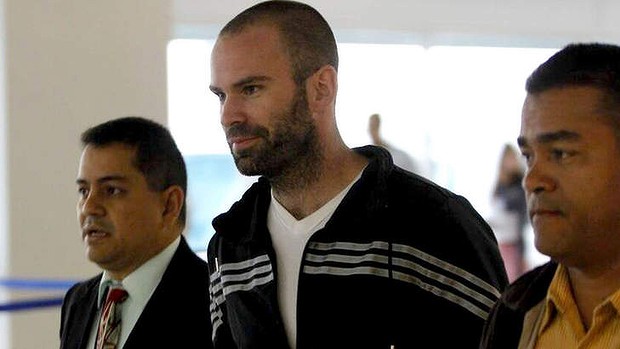
New York Times: DHA Client Released from Venezuelan Prison
David House Agency client, Los Angeles based filmmaker Tim Tracy, wrongfully accused of seeking to topple the Venezuelan government, was released on June 05, 2013 for lack of evidence. A sequence of swift steps and the right team resulted in a quick resolution on this one. Read more…